Published 2 November 2026, 12:08 Asia/Gaza. Developing story; we will add dated updates as authorities confirm details.
Update, 11 November 2026, 10:09 Asia/Gaza: France attributes the October attacks
On Monday 9 November, France formally attributed the attacks of the night of 11 to 12 October on the refrigeration controls of more than 700 French retail sites to SHAHID KAVEH, which it describes as an offensive cyber unit affiliated with the Electronic Warfare and Cyber Defence Organization of Iran’s Islamic Revolutionary Guard Corps (France Diplomatie statement, dated 10 November on the ministry’s site). France says the attacks spoiled food worth tens of millions of euros and caused fires: at least 15, according to the joint report of France’s cyber crisis coordination centre (C4 / CERT-FR), and about 20, according to the Paris prosecutor. France summoned Iran’s ambassador and says it will propose new EU sanctions. The Paris prosecutor opened a judicial investigation into the unit’s head and two deputies and is asking for international arrest warrants. According to the prosecutor, the attackers took control of Danfoss and Dixell controllers through their web interfaces, started defrost cycles with no time limit and switched off the temperature-probe alarms (BleepingComputer, The Hacker News). France’s attribution covers only the October wave in France, not the later attacks on stores in other European countries described below. On 10 November, Iran’s foreign ministry rejected the accusations as “baseless” (NPR, BBC). The checklist in this article is unchanged: keep controller web interfaces off the internet, change default passwords, and route temperature alarms to someone who can act at night.
Update, 3 November 2026, 07:10 Asia/Gaza
AFP reported at 01:55 on 3 November that the attacks have now hit at least nine countries, including Italy and Portugal, and that the EU called them a deliberate attempt to disrupt the food supply (AFP). Anadolu Agency reported that a Danish food producer was also affected, citing the Confederation of Danish Industry (DI). Danfoss told Anadolu that the affected systems were using default passwords. Change the default passwords on refrigeration controllers and keep them off the public internet. These are news-agency reports, and no attacker has been officially named.
Update, 2 November 2026, 22:15 Asia/Gaza
A Delhaize store in Hoeilaart, near Brussels, lost at least €100,000 of frozen food and stayed closed until about noon, its manager told HLN, as the BBC also reported. That figure does not include losses from the closure. Belgium’s federal prosecutor has opened an investigation, according to Euronews.
Update, 2 November 2026, 19:10 Asia/Gaza
The fridge attacks have now hit supermarkets in seven countries: Belgium, Luxembourg, Sweden, Estonia, Ireland, the Netherlands and Finland, the BBC and AFP reported on 2 November. In Belgium, about 40 Delhaize, 15 Carrefour and 5 Spar stores were affected, plus IKEA in Mons. In Ireland, 13 SuperValu stores were hit. Coop (6 stores) and ICA were hit in Sweden, Selver in Estonia, Kesko K-stores in Finland, and 17+ companies in the Netherlands, according to Danfoss. Refrigeration firm Sabcobel says attackers switched evaporators to defrost mode, and some units reached up to 50°C. The attacks echo the 12 October incident in France. No one has claimed them, and Belgium’s CCB says it is aware. The checklist below still applies: take refrigeration controllers off the open internet, change default passwords and set temperature alarms that do not depend on the same system.
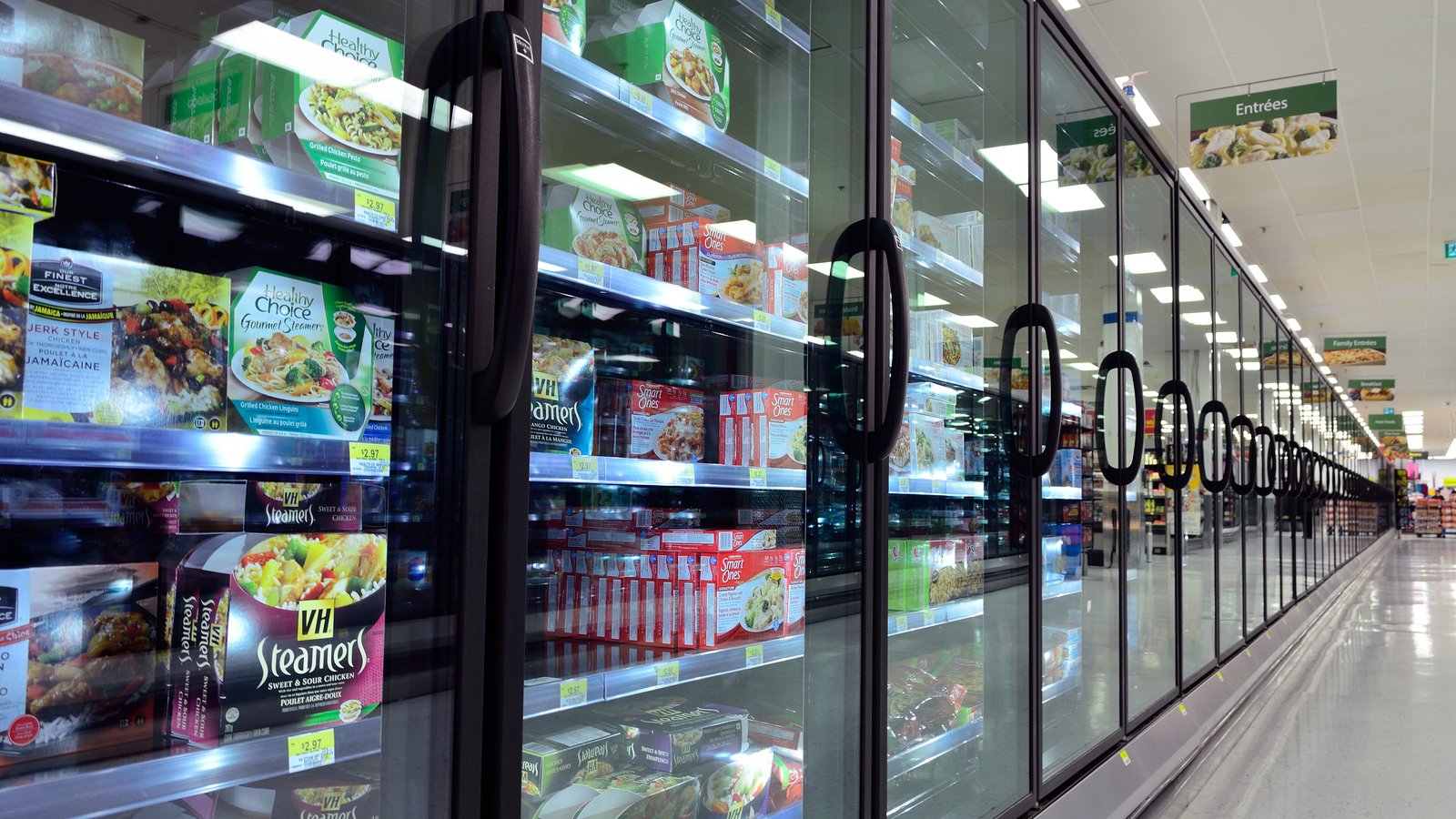
Short answer: A supermarket cyber attack hit refrigeration systems overnight on 2 November 2026. Freezers and fridges in about 40 Delhaize, 15 Carrefour Belgium and about 5 Spar stores in Belgium and Luxembourg, plus ICA and Coop stores in Sweden, were remotely switched into defrost. Food was destroyed and some stores closed. It mirrors the October attack on about 700 French supermarkets. No Gulf or Egypt incidents are reported, but the same equipment is everywhere, so check yours tonight.
Key facts
- When: alarms from about 03:00 Brussels time (04:00 Asia/Gaza) on 2 November 2026. First media reports from 08:42 Brussels time.
- Belgium and Luxembourg: about 40 Delhaize stores (mainly Shop & Go, Proxy Delhaize and motorway shops), 15 Carrefour Belgium stores, about 5 independent Spar stores and the butcher chain De Laet & Van Haver.
- Sweden: ICA confirmed “a limited number of stores”, which were connected outside its central network. One ICA store said freezers were set to +50°C. Coop confirmed 6 stores in central Sweden.
- How: settings changed from outside; evaporators put into defrost mode (refrigeration installer Sabcobel, De Laet & Van Haver).
- Official status: Ahold Delhaize calls it an “IT incident”. Not yet officially attributed; no group has claimed it.
- Precedent: in October about 700 of roughly 10,000 French supermarkets were hit. CERT-FR alert CERTFR-2026-ALE-012 names Danfoss AK-SM/AK-SC, Copeland XWEB and Dixell XWEB.
What happened: a supermarket cyber attack on fridges, not on tills
In the early hours of Monday 2 November, refrigeration alarms started going off in Belgian supermarkets. By morning, staff in dozens of stores found chilled cabinets and freezers far too warm. Ahold Delhaize spokesperson Sarah De Meester told VRT NWS that about 40 Delhaize stores in Flanders and Wallonia were affected, along with stores in Luxembourg, and called it an “IT incident”. In some stores the temperature reached about 15°C. Reports of 70°C have not been confirmed.
Other chains followed. Carrefour Belgium reported 15 stores and Spar about five independent stores. Colruyt said its own stores were not affected. The butcher chain De Laet & Van Haver said alarms went off at 03:00, that parameters had been changed from outside and evaporators set to defrost, and that it paused the system in time. One Proxy Delhaize store in Limburg estimates at least 60,000 euros of food lost, and HLN quotes a store that threw away about 100,000 euros of food.
In Sweden, Reuters reported that freezer temperatures soared overnight at ICA and Coop stores. ICA confirmed “a limited number of stores” were affected and said those stores have their connection outside ICA’s central network. ICA Kvantum Sjöbo said its freezers had been set to +50°C and it discarded food worth hundreds of thousands of kronor (TV4). Coop said six stores in central Sweden had similar problems.
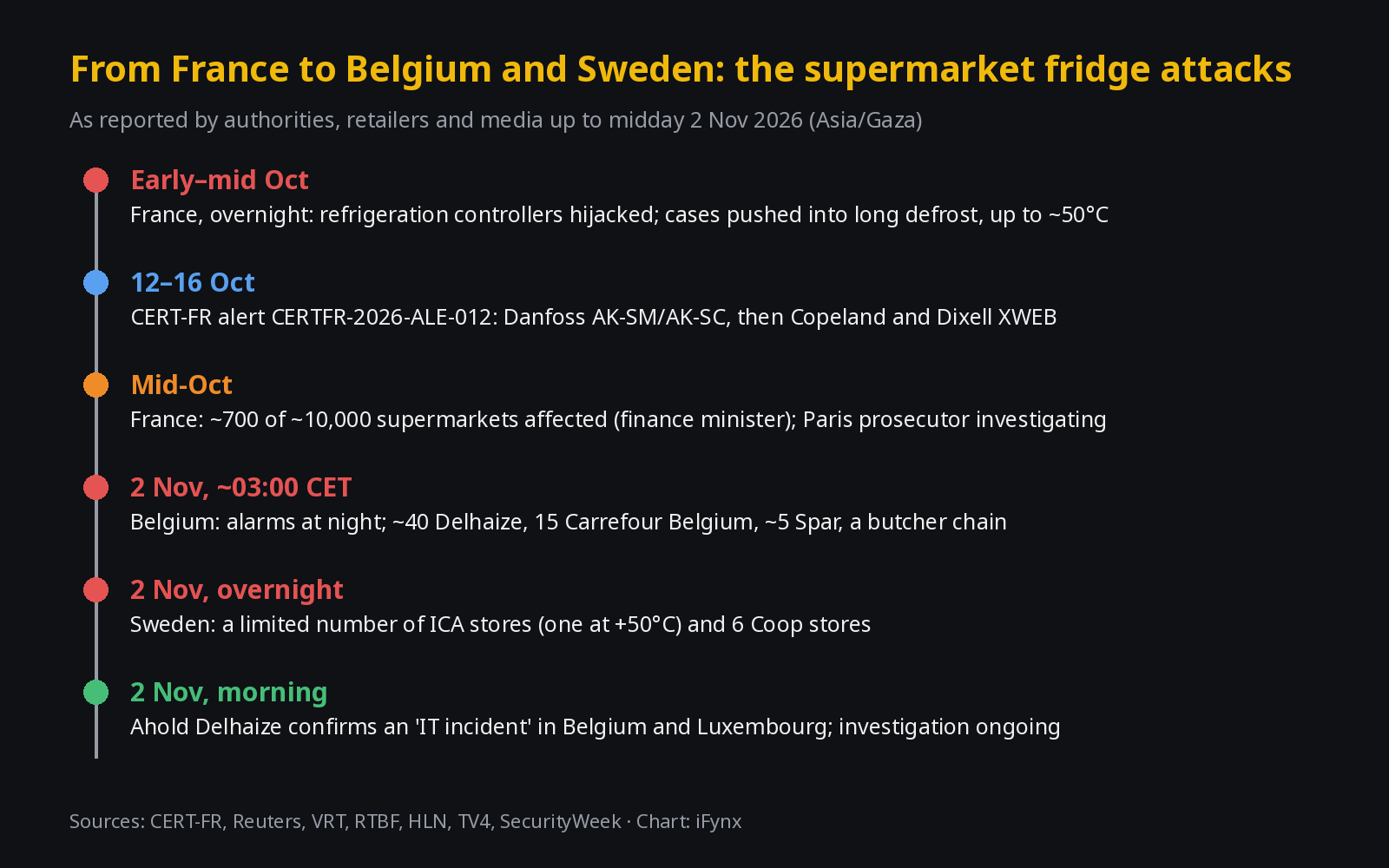
Parameters were changed from outside and the evaporators were set to defrost. We were able to pause the system in time.
De Laet & Van Haver, paraphrased from VRT NWS, 2 November 2026
Supermarket fridges hacked: how the attack works, in plain terms
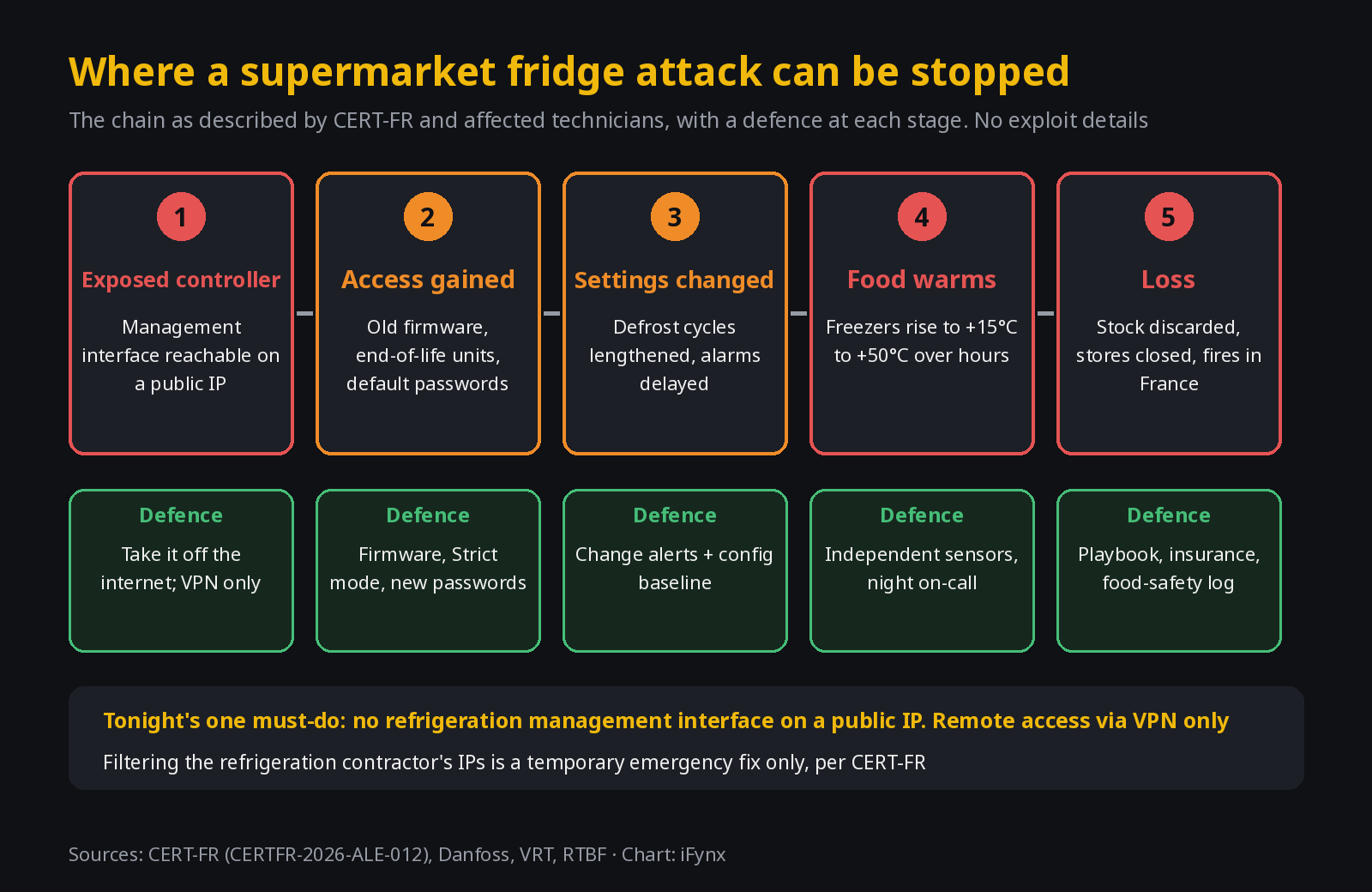
Large stores do not control each freezer by hand. A central refrigeration controller sets temperatures and schedules defrost cycles, which normally melt ice off the evaporators for a short time. Contractors often reach these controllers remotely to monitor and service them.
According to Belgian refrigeration installer Sabcobel, the method on 2 November was the same as in France: evaporators were remotely put into defrost mode. In France, Le Monde reporting summarised by SecurityWeek said defrost cycles were lengthened from about one hour to as much as eight, which delayed alarms. That is why staff often only noticed in the morning. We do not publish technical attack details; the defence below is what matters.
The French precedent and the CERT-FR alert
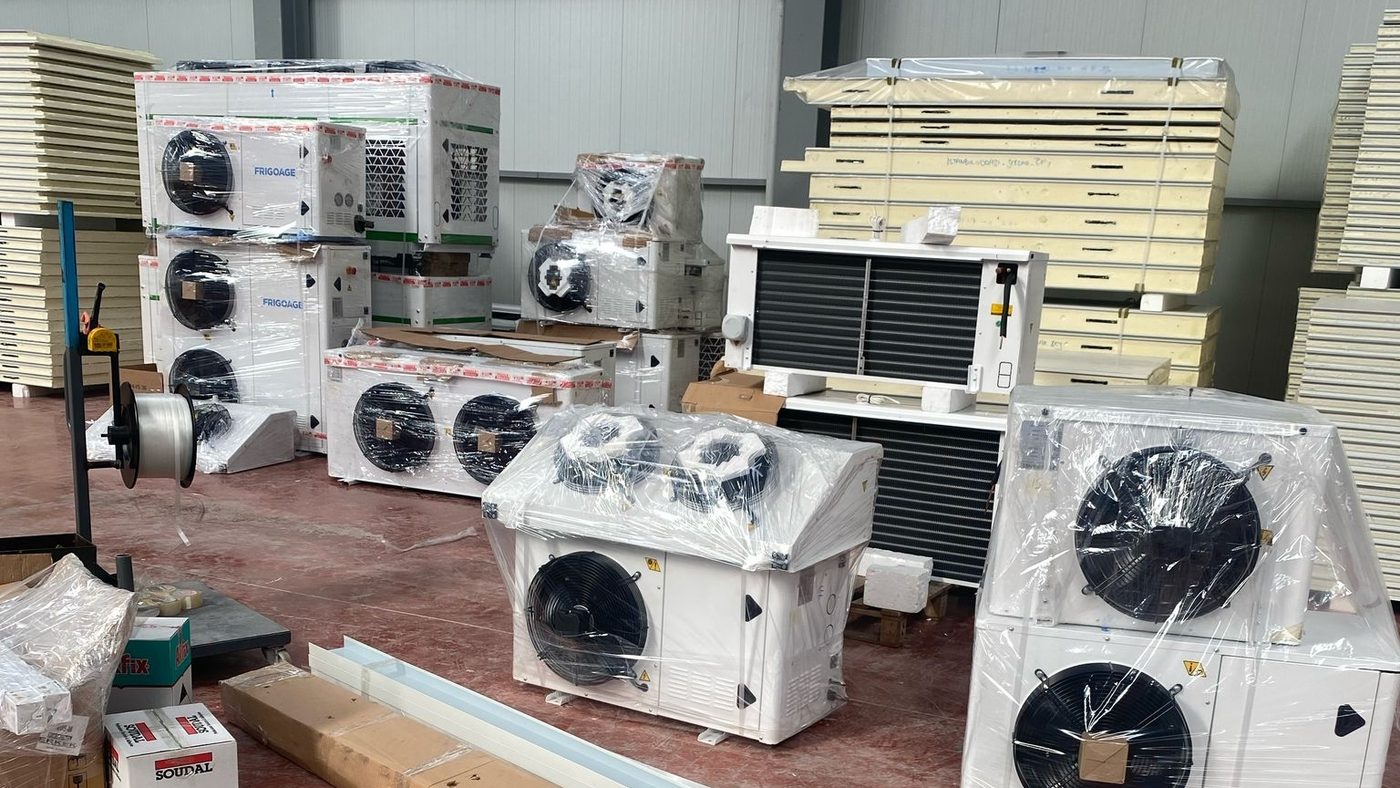
In mid-October, an overnight attack switched refrigeration in hundreds of French supermarkets into defrost, with some units reportedly set to 50°C (SecurityWeek). France’s finance minister later put the toll at about 700 of roughly 10,000 supermarkets (AP). Stores in Belgium, Germany, the Netherlands, Poland, Portugal and Spain were also reported affected. The Paris prosecutor’s cybercrime unit is investigating and no attacker has been identified (CNN).
France’s national CERT published alert CERTFR-2026-ALE-012 and updated it on 13 and 16 October. It names Danfoss AK-SM and AK-SC series controllers, then Copeland XWEB and Dixell XWEB. Danfoss said most affected units were old AK-SM800 and AK-SC355 models, plus some AK-SM800A units on outdated firmware. CERT-FR says the campaigns are probably still ongoing.
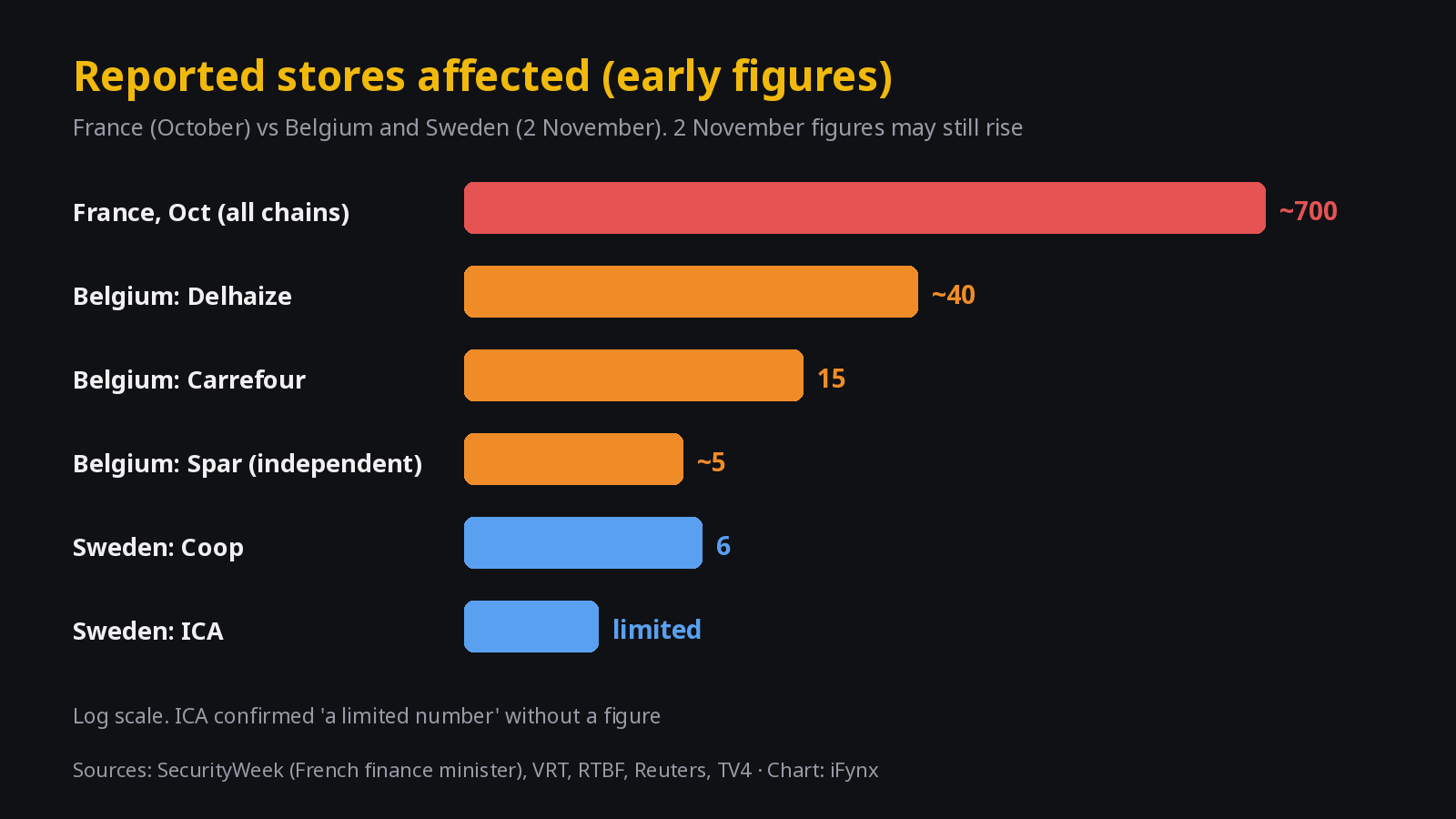
| Country / chain | Stores reported | What they said | Source |
|---|---|---|---|
| France, all chains (Oct) | about 700 | Long defrost, up to 50°C, some fires | AP, SecurityWeek |
| Belgium + Luxembourg: Delhaize | about 40 | “IT incident”, up to about 15°C | VRT |
| Belgium: Carrefour | 15 | Refrigeration hit overnight | VRT |
| Belgium: Spar (independent) | about 5 | Colruyt’s own stores not affected | VRT live |
| Sweden: ICA | limited number | One store at +50°C | Reuters, TV4 |
| Sweden: Coop | 6 | Stores in central Sweden | Reuters |
What is confirmed, and what is not
- Confirmed: refrigeration settings were changed remotely in multiple chains in Belgium, Luxembourg and Sweden overnight on 2 November.
- Confirmed: food was destroyed and some stores closed or emptied their freezers.
- Not confirmed: who did it, how they got in, and which equipment brand was involved on 2 November.
- Not confirmed: any link to a separate Ahold Delhaize IT incident in October that the company reported to Dutch police.
- Not reported: any incident in the Gulf or Egypt as of publishing.
Gulf and Egypt angle: why heat makes this worse
Carrefour in the Gulf and Egypt is operated by Majid Al Futtaim under franchise, a separate company from Carrefour Belgium, and nothing suggests the region has been hit. But the business risk is bigger here. Ambient temperatures stay high for most of the year, so a freezer forced into defrost warms faster, and the window before food must be thrown away is shorter.
The exposure also goes beyond big supermarkets. Quick-commerce dark stores, cloud kitchens, pharmacy cold rooms for insulin and vaccines, fuel-station convenience stores and cold-chain warehouses all run similar controllers, often installed and remotely monitored by a third-party contractor.
Regulation already points the same way. Saudi Arabia’s National Cybersecurity Authority has Operational Technology Cybersecurity Controls (OTCC-1:2022), mandatory for critical national infrastructure and recommended for others. The UAE’s National Policy for the Internet of Things Security calls for security by design and layered defences. Egypt’s EG-CERT handles incident reporting. Food-safety inspectors across the region already expect temperature logs, and these logs will also be your evidence if this happens to you.
Tonight’s checklist for retailers, dark stores and cold-chain teams
1) List every refrigeration controller and who can reach it. 2) Make sure none has a management page on a public IP; allow remote access via VPN only. 3) Update firmware, turn on the vendor’s strict security mode, and change default passwords. 4) Compare setpoints and defrost duration with a known-good baseline. 5) Send temperature alarms to an on-call person through an independent sensor or SMS path. 6) Agree with your contractor and insurer what to do before you cut their remote link.
For app and product teams: alerts that do not trust the controller
If you build retail, delivery or facilities apps, this incident is a design brief. Push a notification when any setpoint or defrost schedule changes, not only when a temperature threshold is crossed. Read temperatures from independent sensors where possible, so a tampered controller cannot hide the problem. Keep an append-only audit log of configuration changes with who made them. And make the night-time escalation path a phone call to a named person, not an email.
What to watch next
- Whether Belgium’s Centre for Cybersecurity (CCB) or Sweden’s CERT-SE publish an advisory.
- Confirmation of the equipment brand and the access path used on 2 November.
- Any claim of responsibility, and whether the Paris investigation links the two waves.
- Final store counts and insurance and food-loss figures.
We will add a dated update if authorities or retailers confirm new details.
How iFynx can help
iFynx builds bilingual apps, dashboards and alerting for retailers and operators in the UAE, Saudi Arabia and Egypt, including monitoring screens and escalation flows that do not rely on a single vendor box. See our services or read what is iFynx?. More security coverage: BTCPay Server hack, WordPress 7.1.4 security release, Brotli Node2Shell vulnerability, Coinbase data breach and UAE online fraud.
FAQ
What happened in the supermarket cyber attack on 2 November 2026?
Overnight on 2 November 2026, refrigeration and freezer systems in supermarkets in Belgium, Luxembourg and Sweden were remotely switched into defrost, so temperatures rose and food had to be thrown away. About 40 Delhaize stores, 15 Carrefour Belgium stores and about 5 Spar stores were hit in Belgium, plus a limited number of ICA stores and 6 Coop stores in Sweden. Ahold Delhaize calls it an IT incident and the investigation is ongoing.
Is it the same attack as the one on French supermarkets in October?
It looks very similar but no authority has linked them yet. In October about 700 French supermarkets had refrigeration controllers switched to long defrost cycles, and CERT-FR named Danfoss AK-SM and AK-SC, Copeland XWEB and Dixell XWEB devices. A Belgian refrigeration installer says the 2 November method is the same: evaporators remotely put into defrost mode. The make of the equipment hit on 2 November has not been officially confirmed.
Is food from affected stores safe to eat?
Stores say any product whose storage temperature can no longer be guaranteed is withdrawn and destroyed, which is why losses are large: one Belgian store estimates at least 60,000 euros of food. Shoppers do not need to do anything for products bought before the incident, but if you bought chilled or frozen food from an affected store on 2 November, follow the store’s notice.
Are supermarkets in the UAE, Saudi Arabia or Egypt affected?
No incidents in the Gulf or Egypt had been reported at the time of publishing. Carrefour in the Middle East is run by Majid Al Futtaim under franchise, a different company from Carrefour Belgium. The risk is the same type of equipment: any store, dark store, cloud kitchen or pharmacy with a refrigeration controller reachable from the internet.
What should a retailer do first?
Make sure no refrigeration management interface is reachable from the public internet, and allow remote access only through a VPN. Then update firmware, change default passwords, check that defrost settings match your baseline, and make sure temperature alarms reach a person at night through a channel that does not depend on the controller. CERT-FR says filtering the contractor’s IP addresses is only a temporary emergency measure.
Who should a company in the Gulf or Egypt notify if its refrigeration is tampered with?
Treat it as a cyber incident: inform your national CERT or cybersecurity authority, your refrigeration contractor, your insurer and the food-safety regulator, and keep the controller logs. In Saudi Arabia that is the National Cybersecurity Authority, in the UAE the Cyber Security Council, and in Egypt EG-CERT.
Sources
- VRT NWS and VRT live blog, 2 November 2026
- HLN, 2 November 2026
- Reuters via StreetInsider, 2 November 2026, 09:27 UTC (11:27 Asia/Gaza)
- TV4, 2 November 2026
- CERT-FR alert CERTFR-2026-ALE-012, 12, 13 and 16 October 2026
- SecurityWeek: 13 October and Copeland and Dixell
- AP and CNN, October 2026
- Saudi NCA OTCC; UAE National Policy for IoT Security
- Hero photo: Raysonho, Wikimedia Commons, CC0, cropped. In-body photo: Mesadbal, Wikimedia Commons, CC BY 4.0, cropped. Charts: iFynx.


Related reading
- Android TV Box Malware: Google Takes Down the XCPE Botnet in 1.3 Million Boxes. Is Your Box or IPTV Receiver Infected? A Check-and-Replace Guide for Egypt, Iraq, the Gulf and Palestine
- No, There Is No Global Cyberattack on 17 November: What Really Happens That Day, Why Banks Can't Be Wiped, and the Scams to Watch in the Gulf and Egypt