The short answer
UAE online fraud has moved from fake links to fake authority. On 25 October 2026, Dubai Police said they had recovered more than Dh1 million for a woman who moved her savings to an account chosen by a fraudster posing as a government official. He told her that her bank account was “under suspicion”, ordered her to keep the matter secret, and promised the money would come back once “verification” was finished. Dubai Police recovered the full amount after she reported it. The case is a near-perfect template of the government-impersonation scam, and the lesson for people is simple: no police force, regulator or bank in the UAE will ask you to transfer money to “verify” or “protect” your account.
The lesson for banks, wallets and fintech apps is harder. Every step of this scam took place outside the app, but the money moved through the app. This guide gives you the verified facts and dates, explains how to report online fraud in the UAE, Saudi Arabia and Egypt, and then gives our iFynx product checklist. It covers the screens, warnings, delays and Arabic microcopy that a UAE banking app can ship to interrupt this scam before the transfer, not after it.
Key facts, with dates and sources
- 25 October 2026 (20:25 UAE time, Gulf News; Gulf Today and Arabic outlets the same evening): Lieutenant Colonel Ali Al Yamahi, Director of the Anti-Cybercrime Centre at Dubai Police’s General Department of Criminal Investigation, described the case. The fraudster first called the woman while she was travelling abroad and claimed a government entity needed to verify her “suspicious” account. After she returned to the UAE, he had her transfer her funds to his chosen account. He then told her to visit the bank, and because it was a bank holiday, he said a staff member would come to meet her. Nobody came, so she reported it, and police recovered more than Dh1 million “within a short period” (Gulf News, Gulf Today).
- 24 October 2026: Dubai Police’s Anti-Fraud Centre warned about fake part-time job offers that ask for bank details, OTPs or fees, or that recruit applicants to receive money into their own account and forward it for a commission. The warning is part of the Ministry of Interior campaign “A Safe UAE Starts with Your Digital Awareness” for Cybersecurity Awareness Month (Gulf News).
- 21 October 2026: WAM reported the results of the UAE-led Operation Confrontation Ghost (1 July to 30 September 2026, led by the Ministry of Interior with 30 countries, INTERPOL, the Global Anti-Scam Alliance and 13 private partners). The operation made 960+ arrests, identified more than US$39 billion in fraud-linked funds and digital assets, thwarted 123.71 million online fraud attempts, blocked 4,126 bank accounts, closed 570+ social media accounts and raided 29 fraud centres (WAM).
- 20 October 2026: the Dubai Financial Services Authority (DFSA) warned that scammers were sending fake DFSA “Notice of Investigation” documents promising to recover seized crypto. The scammers used a Gmail address and a foreign WhatsApp number (DFSA alert).
- 25 October 2026: in Egypt, the Central Bank of Egypt’s “Together Against Fraud” campaign with local banks warned about fake links, fake discounts, job scams and people impersonating InstaPay staff and courier companies (Al-Masry Al-Youm).
- In force since 2 January 2022: Article 40 of UAE Federal Decree-Law No. 34 of 2021 on Countering Rumours and Cybercrimes punishes online fraud and online impersonation with at least one year in prison and/or a fine of AED 250,000 to AED 1,000,000 (UAE Legislation).
How the government-impersonation scam works, step by step
We read the Dubai Police account as a five-stage playbook. Naming the stages matters because each one is a place where a product can intervene.
- Contact at a vulnerable moment. The first call came while the victim was abroad. She was far from her branch and her family’s routine, and probably on roaming or an unfamiliar number. Travel, Ramadan nights, salary day and public holidays are classic timing choices.
- Authority plus fear. “Your account is under suspicion” turns the victim into a suspect who must prove her innocence. That is why government, police, central bank and regulator impersonation works better than a fake prize.
- Secrecy. “Don’t tell anyone or the case will be exposed” cuts off the one defence that works best: a second opinion from a family member or the real bank.
- A “safe” or “verification” account. The transfer is framed as a procedure, not a payment. The victim believes the money still belongs to her.
- Stalling. “Go to the bank to restore your account… it is a holiday, so a staff member will come to you.” Stalling buys time for the money to move on through mule accounts. The victim lost hours waiting. Hours are exactly what fraud teams need to freeze funds.
Two details stand out. First, the fraudster waited until the victim was back in the country before asking for the transfer. A domestic transfer from a familiar device and location will not trip most “unusual location” rules. Second, the recovery worked because the report came fast. Time to report is the metric that decides whether money comes back.
How to recognise a government impersonation scam in the UAE
- Someone claiming to be the police, a ministry, the Central Bank, the DFSA or “your bank’s security team” says your account is suspicious, frozen or under investigation.
- You are told to keep it secret, including from your family and your bank.
- You are asked to move money to a “safe”, “verification”, “temporary” or “government” account, or to buy crypto or gift cards.
- Contact comes from a personal mobile, WhatsApp, a foreign number or a free email account. The DFSA, for example, says it does not use Gmail or ask people to talk on WhatsApp from foreign numbers.
- You get official-looking letters with logos, case numbers and officer names. As the DFSA puts it, using a regulator’s name, logo or address “does not make a communication or document genuine”.
- The story keeps changing to delay you: a holiday, a system update, an officer “on the way”.
If any two of these appear together, hang up and call the organisation yourself using the number on its official website or on the back of your card.
How to report online fraud in the UAE (and what to have ready)
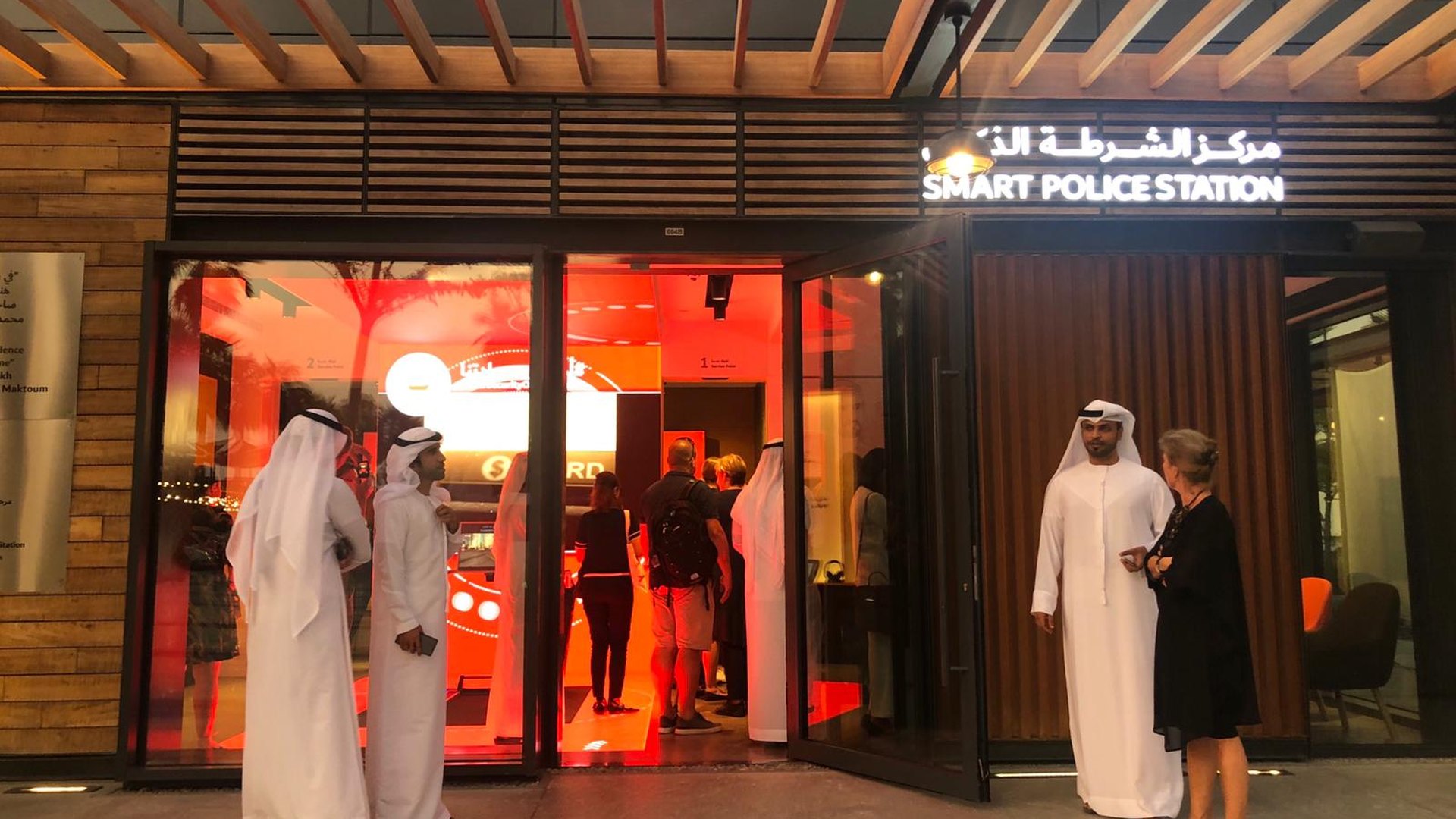
- Dubai: report through the Dubai Police eCrime platform (ecrime.ae, also inside the Dubai Police app), call the 901 call centre (04-901 from outside Dubai), or use Police Eye to report suspicious activity. Dubai Police say eCrime covers crimes within Dubai. Smart Police Stations and participating petrol stations (“On the Go”) can also help you file.
- Other emirates: contact your local police force. The UAE government portal (u.ae) says you can report fraud, scams and cybercrime to your local police, and some economic crimes to the Central Bank of the UAE.
- Your bank, immediately: call the number on your card and ask the bank to stop or recall the transfer and to flag the receiving account. Do this in parallel with the police report, not after it.
- Have ready: your Emirates ID or passport number, the time and amount of each transfer, the beneficiary IBAN or account, the caller’s numbers, and screenshots of messages and documents. Do not delete the chat.
Saudi Arabia: before you open a link you received, you can check it with the National Cybersecurity Authority’s Tahqaq service (WhatsApp +966118136644 or tahqaq.haseen.gov.sa, launched December 2025) (NCA). Report fraud to your bank and the police. Egypt: the CBE says banks and InstaPay staff will never ask for card details, account data or codes by phone or message. Report to your bank’s official hotline.
What Operation Confrontation Ghost tells product teams
The headline numbers are about enforcement, but two of them are product numbers. 4,126 blocked bank accounts means mule accounts are the plumbing of these scams. A government-impersonation transfer only works if a receiving account exists, was opened recently or was rented out, and can pass the money on quickly. The 24 October part-time-job warning shows how those accounts get recruited: “receive money into your personal account and transfer it to another account in return for a commission”. 570+ closed social accounts shows how the first contact is made. The operation’s private partners included platforms (Meta, TikTok), marketplaces (Bayut, dubizzle), a card network (Mastercard), a crypto exchange (Crypto.com) and fraud vendors (Feedzai, Group-IB, Outseer, Trend Micro). The defence is a chain, and a bank app is one link in it, not the whole wall.
The iFynx checklist: anti-scam features a UAE banking app should ship
This is our product reading of the case, not a regulatory requirement. It is written for banks, wallets, remittance and payment apps in the UAE, Saudi Arabia and Egypt.
- A “we will never ask you to move money” interstitial, at the right moment. Don’t bury it in a footer. Show it when a large transfer goes to a beneficiary that is new or less than 24 hours old. Write it in plain Arabic and English: “No police force, government entity or bank will ever ask you to transfer money to verify or protect your account.” Make the default button “Cancel and call the bank”, not “Continue”.
- A purpose question that catches the script. Add one option to the transfer-purpose list: “Someone asked me to move my money to keep it safe or to verify my account.” If the user picks it, hard-stop the transfer and offer an instant call-back. Victims follow the script, but many answer honestly when asked directly.
- Cooling-off for new, high-value beneficiaries. A short delay (minutes for small amounts, hours for large first-time transfers) with a clear countdown and an easy cancel. Fraudsters rely on urgency; a visible delay gives the victim time to think. Let customers opt in to longer holds on their savings.
- Break the secrecy instruction. Offer an optional “trusted contact” who is told, without being given control, when the account sends an unusually large first-time transfer. Older customers and customers who travel often benefit most. The scam depends on “don’t tell anyone”, so the app should make telling someone the default.
- An in-app way to verify a caller. Add an in-app “Is this call really from my bank?” check. It tells the customer whether the bank is calling them right now and through which channel. Pair it with a simple rule repeated everywhere: we only contact you from these numbers and inside this app.
- Mule signals on the receiving side. Score inbound-then-outbound velocity on young accounts, many unrelated senders, salary-like amounts with no employer, and logins from devices linked to other accounts. Recruiting part-time “job” applicants as mules is an account-opening and monitoring problem, and the receiving bank sees it first.
- One-tap “I think I’ve been scammed”. Put it on the home screen and on every transfer receipt. One action should freeze outgoing payments, start a recall request, show the eCrime and 901 details (or the local police equivalent), and timestamp everything for the investigation. Measure time to report as a product KPI.
- Holiday- and travel-aware messaging. The Dubai fraudster used a bank holiday and an “officer will come to you” story. Before public holidays, and when customers turn on travel notices, push a short warning: “Bank staff will not visit you at home to restore your account.”
- Arabic-first, not translated. Write warning copy in Arabic first and test it with real users. Formal Modern Standard Arabic can sound like the fraudster’s “official” tone. A short, warm, clear warning lands better than legal text.
- Measure and tune. Track warning view rates, cancel rates after a warning, complaints from false positives, and confirmed fraud prevented. A warning nobody reads protects nobody, and a delay on every transfer trains people to ignore delays.
What this means for fintech and super apps in the Gulf and Egypt
The same pattern runs in Saudi Arabia (people posing as bank or government staff over WhatsApp) and Egypt (people posing as InstaPay staff and couriers, per the CBE campaign). Instant rails, such as Aani in the UAE, sarie in Saudi Arabia and InstaPay in Egypt, make good transfers fast, and that also makes stolen money fast. The answer is not to slow everything down. The answer is to add friction only where the risk is: new beneficiaries, unusual amounts, scripted purposes and young receiving accounts. If you build onboarding with national digital identity, such as UAE Pass, Nafath or Egypt’s Haweya, you can also tie high-risk actions to a fresh identity check instead of a reusable OTP that a fraudster can talk someone into sharing.
Frequently asked questions
How do I report online fraud in the UAE?
In Dubai, use the Dubai Police eCrime platform (ecrime.ae or the Dubai Police app), call 901, or use Police Eye. In other emirates, contact your local police. Call your bank at the same time so it can try to stop or recall the transfer and flag the receiving account.
Can money lost to a scam in the UAE be recovered?
Sometimes, and speed matters most. In the 25 October 2026 case, Dubai Police recovered more than Dh1 million after the victim reported the scam. Recovery gets harder once money has passed through several mule accounts or been converted to crypto, so report within minutes or hours, not days.
Will the police or a government entity ever ask me to transfer money to verify my account?
No. Neither UAE police, government entities, the Central Bank, regulators like the DFSA, nor your bank will ask you to move money to a “safe” or “verification” account or to keep a call secret from your family or bank. A request like that is a scam.
What is the penalty for online fraud in the UAE?
Under Article 40 of Federal Decree-Law No. 34 of 2021 on Countering Rumours and Cybercrimes, online fraud or impersonation through an information network is punishable by at least one year in prison and/or a fine of AED 250,000 to AED 1,000,000.
Is it illegal to receive money for someone else through a part-time job in the UAE?
It can make you part of a crime. Dubai Police warn that job offers asking you to receive money into your personal account and transfer it on for a commission may be linked to illegal financial transactions. Stop communicating and report the offer through eCrime or 901.
Related reading
- Apple Threat Notification: Germany Warns MPs and Ministers of Mercenary Spyware on iPhones. How to Tell a Real Alert From a Scam, and a Lockdown Mode Guide for the Gulf, Egypt and Palestine
- Android TV Box Malware: Google Takes Down the XCPE Botnet in 1.3 Million Boxes. Is Your Box or IPTV Receiver Infected? A Check-and-Replace Guide for Egypt, Iraq, the Gulf and Palestine
- Crypto bank account UAE: Standard Chartered Bitcoin and Ether trading, and which UAE banks offer crypto
- Supermarket Cyber Attack: Fridges and Freezers Hacked in Belgium and Sweden, and the Checklist Gulf and Egypt Retailers Need Tonight
- Binance Hack: What We Know About the $6.3 Billion Theft, When Withdrawals Return, and What Users and Fintech Teams in the UAE, Saudi Arabia and Egypt Should Do
- Coinbase Data Breach via Amplitude: What Leaked, What Didn’t, and the Analytics SDK Checklist for Gulf and Egypt Apps
- AI agent bank account access: why US banks block password-sharing bots, and the Open Finance consent spec for UAE and Saudi apps
- Robinhood UAE: what the DFSA licence covers and the checklist for GCC trading apps
- Egypt’s Haweya digital financial identity is a device-bound credential, not just eKYC
- Nafath, UAE Pass and national e-KYC: onboarding UX that survives the app switch
- UAE Open Finance and Al Tareq: consent UX must feel like one national front door
- PHP vulnerability 2026 (php2shell): the patch checklist for WordPress and Laravel
- Building a banking, wallet or payments app? See our app development in the UAE and app development in Saudi Arabia services.
Sources
- Gulf News, “Dubai Police recover Dh1 million in government impersonation scam”, 25 October 2026: https://gulfnews.com/uae/dubai-police-recover-dh1-million-in-government-impersonation-scam-1.500723270
- Gulf Today, “Dubai Police recover over Dhs1m for victim of online scam”, 25 October 2026: https://www.gulftoday.ae/news/2026/10/25/dubai-police-recover-over-dhs1m-for-victim-of-online-scam
- Gulf News, “Dubai Police warn of fake part-time job offers targeting UAE jobseekers”, 24 October 2026: https://gulfnews.com/uae/dubai/dubai-police-warn-of-fake-part-time-job-offers-targeting-uae-jobseekers-1.500722324
- WAM, “UAE-led Operation Confrontation Ghost identifies over US$39 billion in fraud-linked assets”, 21 October 2026: https://www.wam.ae/en/article/17hjcqa-uae-led-operation-confrontation-ghost-identifies
- DFSA, “DFSA Impersonated in Cryptocurrency recovery scam”, 20 October 2026: https://www.dfsa.ae/alerts/dfsa-impersonated-cryptocurrency-recovery-scam
- Al-Masry Al-Youm, CBE “Together Against Fraud” campaign, 25 October 2026: https://www.almasryalyoum.com/news/details/4392102
- Saudi NCA, “NCA Launches Tahqaq Service”, 30 December 2025: https://nca.gov.sa/en/news/2093/
- UAE Legislation, Federal Decree-Law No. 34 of 2021 on Countering Rumours and Cybercrimes (Article 40): https://uaelegislation.gov.ae/en/legislations/1526
- UAE Government portal, “Reporting economic crimes”: https://u.ae/en/information-and-services/business/important-digital-services/reporting-economic-crimes
- Hero photo: Dubai Smart Police Station, by KhalifaSays (Wikimedia Commons), CC BY-SA 4.0, cropped: https://commons.wikimedia.org/wiki/File:Dubai_SPS.jpg