Short answer: A Jaywan card is a debit, prepaid or co-badged card on the UAE’s own national card scheme, run by Al Etihad Payments (a Central Bank of the UAE subsidiary). This week Jaywan reached a new group of users: Botim launched the Botim One Jaywan Prepaid Card, the first Jaywan prepaid card issued by a fintech platform, aimed at workers paid through the Wage Protection System (WPS), starting with 200,000+ workers and targeting up to 4 million. A day earlier MoHRE said seven more banks and exchange houses joined the upgraded API-based WPS, taking it to 17 partners. Together, the two moves link salary to card to spending on domestic rails. Payroll, wallet and checkout teams in the UAE need to plan for that now.
The Jaywan card has moved from a launch-day headline in July to something that will soon sit in the pockets of hundreds of thousands of workers. On 28 October 2026, Botim announced the Botim One Jaywan Prepaid Card, distributed through its WPS payroll network and exchange-house partners. The same evening, WAM reported that First Abu Dhabi Bank, Emirates NBD, Dubai Islamic Bank, Mashreq, Ajman Bank, Lari Exchange and First Gulf Exchange Centre are joining the upgraded Wage Protection System that Al Etihad Payments runs for the Ministry of Human Resources and Emiratisation (MoHRE). Al Etihad Payments now sits under both the salary rail and the card scheme. For anyone building payroll software, wallets, remittance apps or e-commerce checkouts in the UAE, that is the real story. This guide covers what was announced, what a Jaywan card is (and isn’t), and the build checklist we would use.
Key facts (as of 30 October 2026, 09:30 Asia/Gaza)
- Botim One Jaywan Prepaid Card: announced 28 Oct 2026 as the first prepaid card issued by a fintech platform under Jaywan; distribution via Botim’s corporate payroll network and exchange-house partners (Botim release, Arabian Business).
- Scale: 200,000+ workers in phase one, target up to 4 million; Botim reports 8.5 million+ users in the UAE (Gulf News).
- Terms Botim states: multilingual digital onboarding, no minimum salary, no minimum balance; remittances to 170+ destinations, gold and silver from AED 10, credit products where eligible.
- WPS upgrade: 7 new partners (FAB, Emirates NBD, DIB, Mashreq, Ajman Bank, Lari Exchange, First Gulf Exchange Centre) bring the total to 17; WPS covers 99%+ of private-sector workers and averages AED 37 billion of wages a month (WAM, 28 Oct).
- How WPS now works: launched Dec 2025 by MoHRE with the CBUAE and Al Etihad Payments; secure APIs, real-time data exchange, no paperwork or branch visit to register; MoHRE says about 90% less data is required (Gulf News).
- Jaywan scheme: operational launch announced 20 Jul 2026; FAB (debit) and CBD (prepaid) were among the first issuers; Network International enabled online acceptance with no additional merchant fees on Jaywan transactions through its gateway (The National).
- Co-badging: first Jaywan–Mastercard co-badged credit card announced 21 Jul 2026 (Al Etihad Payments).
What exactly did Botim launch?
The Botim One Jaywan Prepaid Card is a prepaid card that Botim issues on the Jaywan scheme, so the domestic transactions are routed and processed inside the UAE. Botim is accredited by MoHRE as a WPS provider, so an employer can pay salaries through Botim’s payroll service and the worker can spend that salary with the card at payment terminals and online. Before this, the value of digital wages often stopped at the ATM: the money landed, and the worker took it out in cash.
Distribution is the interesting product decision. Botim is not starting with app-store marketing. It is starting with employers it already pays salaries for and exchange houses that workers already visit to send money home. Andrea Cianchetti, Chief Products Officer at Al Etihad Payments, said in the release that as more banks, fintechs and regulated institutions introduce Jaywan products, the scheme “reaches more customer segments”. This isn’t Botim’s first Jaywan step: in May 2025 it announced a partnership with Mbank to issue Jaywan prepaid cards (Gulf Business), and Botim Money was on WAM’s July 2026 list of the first 11 institutions ready to issue (WAM). What is new is a live product with a named distribution channel and a target size.
What changed in the UAE Wage Protection System (WPS)?
WPS is the system UAE private-sector employers registered with MoHRE use to pay salaries, so the ministry can see whether wages arrive on time. The upgraded version, launched in December 2025, replaced document-heavy registration with API connections between MoHRE and the participating financial institutions, through a central platform that Al Etihad Payments develops and operates. An employer now registers digitally through a connected bank or exchange house and gets the service instantly.
| WPS partners before 28 Oct 2026 (10) | New partners announced 28 Oct 2026 (7) |
|---|---|
| Al Ansari Exchange, Lulu Exchange, GCC Exchange, Al Fardan Exchange | First Abu Dhabi Bank, Emirates NBD, Dubai Islamic Bank |
| Wio Bank, Abu Dhabi Islamic Bank, Al Maryah Community Bank | Mashreq, Ajman Bank |
| Habib Bank AG Zurich, e& Group, Botim | Lari Exchange, First Gulf Exchange Centre |
Dalal Al Shehhi, Assistant Undersecretary for Labour Protection at MoHRE, described the upgraded system as having moved from a compliance mechanism to “an integrated digital financial platform” that provides labour-market data. That phrase matters for product teams. WPS is now a data rail with APIs, and the salary record it carries is one of the most trusted income signals in the country.
Is the Jaywan card Visa or Mastercard?
This is one of the most searched Jaywan questions, and the answer is no. Jaywan is a domestic card scheme, like mada in Saudi Arabia, Meeza in Egypt, RuPay in India or Interac in Canada. A purchase inside the UAE on a Jaywan card is switched over the country’s own infrastructure instead of an international network, which is what lowers merchant costs and keeps payment data in the country.
To work abroad, a Jaywan card has to be co-badged with an international network. Al Etihad Payments has co-badging partnerships for debit and prepaid, and on 21 July 2026 it announced the world’s first Jaywan–Mastercard co-badged credit card, along with a new Mastercard processing node and operations centre in the UAE. Not every card is co-badged, though: FAB said its first Jaywan debit card was for domestic use at launch. In practice, the card face and the issuer’s terms tell you whether it works on a trip to Riyadh, Cairo or Kerala.
Jaywan card benefits, charges and how to apply
- Where it works: point-of-sale terminals, e-commerce, ATMs and digital wallets, with contactless support, according to the CBUAE launch announcement reported by The National.
- Benefits: Al Etihad Payments advertises 150+ offers for Jaywan cardholders, from travel and cinema deals to insurance on some tiers (AEP).
- Charges: cardholder fees are set by the issuer. Ask for the key facts statement and fee schedule. For merchants, Network International said there are no additional fees on Jaywan transactions processed through its gateway.
- How to apply: through a participating issuer (bank app, exchange house or fintech app). Workers on Botim payroll will get the prepaid card through their employer or partner exchange houses.
- Prepaid without a bank account: Al Etihad Payments describes the Jaywan prepaid card as a way to pay “without a bank account”, which is why it suits workers who are paid through WPS but may not have a full current account.
Why salary-to-card on domestic rails matters for product teams
Put the two announcements side by side and you get a closed loop. MoHRE’s WPS (run by Al Etihad Payments) moves the salary. A WPS-accredited fintech or exchange house holds it. A Jaywan card (scheme run by Al Etihad Payments) spends it. Aani (also Al Etihad Payments) moves money person-to-person in under 10 seconds, up to AED 50,000 per transfer. That is a domestic payments stack with one operator underneath, the same pattern Saudi Arabia built with mada, Sarie and Mudad’s wage protection.
Three things follow. First, the low-income worker segment becomes a card-present and e-commerce customer, not just a cash-out customer. Grocery apps, ride-hailing, telecom top-ups and money-transfer services will see Jaywan BINs they have never seen before. Second, payroll data becomes product data: the WPS record is a strong income signal for earned-wage access, micro-credit and savings products, and Botim already says eligible users can access credit. That data needs consent, minimisation and audit trails under the UAE’s data-protection law and CBUAE consumer-protection rules. Third, language and literacy become core requirements. Botim stresses multilingual onboarding for a reason: a workforce of 4 million speaks many languages, and the card’s first users may never have owned one.
Build checklist: what UAE payroll, wallet and checkout teams should do now
For payroll and HR software
- Map which of the 17 WPS partners your customers bank with, and move them to the upgraded, API-connected flow instead of file uploads where the partner supports it.
- Treat salary status as a live state machine (submitted, accepted, credited, failed), not a monthly file. Show employers and workers the same status.
- Add a “pay to Jaywan prepaid card” option per employee, and record the consent and card reference without storing card numbers in your HR database.
For wallets, exchange houses and fintech issuers
- Design onboarding for first-time cardholders: Emirates ID scan, short steps, voice or video help, and support in the languages your workers actually use, not only Arabic and English.
- Show salary arrived, balance and fees on the first screen. Notify on every load and every spend, and make freeze-card and PIN reset one tap away.
- Publish a fee table in plain words (ATM withdrawals, international use on co-badged cards, replacement, inactivity) and repeat it at the moment the fee applies.
- Expect salary-day spikes in logins, loads and remittances. Load-test for the day wages land and pre-scale card-processing and notification queues.
- Build scam friction for salary day: the same week wages land, fraudsters impersonate employers, banks and government. Our UAE online fraud checklist has 10 patterns to copy.
For merchants and checkout teams
- Ask your acquirer or gateway (for example Network International, which already accepts Jaywan online) whether Jaywan is enabled on your merchant ID, and get the Jaywan BIN ranges from them rather than guessing.
- Do not reject unknown card brands in the front end. Let the gateway decide, show a Jaywan logo when the BIN matches, and make sure your card-type detection doesn’t label Jaywan as “invalid card”.
- For co-badged cards, confirm with your acquirer how domestic routing works, so UAE purchases go over the cheaper domestic rail.
- Rewrite decline messages: a prepaid card with an insufficient balance needs “Top up or use another card”, not a generic error. See why a failed card is a recovery job, not a toast.
- Offer Aani QR or Request to Pay next to cards for customers who would rather pay from an account.
What this means for Saudi Arabia and Egypt teams
The UAE is catching up with a model its neighbours already run. Saudi Arabia has mada as its national scheme and wage protection through Mudad, and Egypt has Meeza and a long history of payroll cards for government and private-sector staff. Regional fintechs that already built for mada or Meeza can reuse most of their domestic-scheme work: BIN-based routing, local tokenisation and national-ID onboarding. The UAE-specific parts are the WPS API integration, the co-badging rules and Jaywan’s acceptance footprint, which is still growing. If you run one checkout across the Gulf and Egypt, treat national schemes as a first-class card type in your payment layer, not a special case.
What is still unclear
- Fees on the Botim card: the release does not list cardholder fees; check Botim’s in-app terms before advising workers.
- International use: the release does not say whether the Botim One card is co-badged for use abroad.
- Jaywan credit cards: Mastercard is the first credit co-badge partner, but no issuing bank, launch date or pricing has been announced.
- Acceptance coverage: Network International accepts Jaywan online, but coverage at other acquirers and in-app wallets is still growing; test before you promise it to customers.
How iFynx helps UAE fintech and payroll teams
iFynx designs and builds bilingual Arabic and English apps for fintechs, banks and payroll providers in the UAE, Saudi Arabia and Egypt. For a Jaywan or WPS launch we usually start with a two-week sprint: map the salary-to-card journey, prototype onboarding for first-time cardholders, and review the checkout and decline flows against the scheme rules. Read more about our app development work in the UAE or talk to us.
FAQ
What is a Jaywan card?
Jaywan is the UAE’s national domestic card scheme, owned and operated by Al Etihad Payments, a subsidiary of the Central Bank of the UAE. A Jaywan card is a debit, prepaid or (soon) credit card issued by a UAE bank, exchange house or licensed fintech on that scheme. Domestic transactions are switched and processed inside the UAE instead of through an international network. Cards became available to consumers when the scheme’s operational launch was announced on 20 July 2026. The name comes from Emirati Arabic and means “precious pearl”.
Is the Jaywan card Visa or Mastercard?
Neither by default. Jaywan is a separate scheme, in the same family as mada in Saudi Arabia, Meeza in Egypt or RuPay in India. For use abroad, issuers can co-badge a Jaywan card with an international network: Al Etihad Payments has co-badging agreements covering debit and prepaid cards, and on 21 July 2026 it announced the first Jaywan–Mastercard co-badged credit card. Some cards are domestic-only (FAB said its first Jaywan debit card was for domestic use at launch), so check the logos on your card and your issuer’s terms before you travel.
How do I apply for a Jaywan card?
You apply through an issuer, not through Al Etihad Payments. The first 11 institutions ready to issue, per WAM on 23 July 2026, were FAB, ADCB, Sharjah Islamic Bank, Emirates NBD, Bank of Baroda, Commercial Bank of Dubai, Emirates Islamic, Mbank, Citi, Al Ansari Exchange and Botim Money, with others joining in phases. Bank customers usually request the card in their mobile banking app. Workers paid through Botim’s WPS payroll service are being offered the Botim One Jaywan Prepaid Card through their employer or partner exchange houses.
What are the Jaywan card charges and benefits?
Cardholder fees are set by each issuer, so read your bank’s or fintech’s schedule of charges. On the merchant side, Network International said there are no additional fees for merchants on Jaywan transactions processed through its gateway. Al Etihad Payments advertises more than 150 offers for Jaywan cardholders, including travel, dining, cinema and insurance benefits on some card tiers. Botim says its prepaid card has no minimum salary and no minimum balance.
What does the Botim One Jaywan Prepaid Card change for workers paid through WPS?
Until now many workers paid through the Wage Protection System used a payroll card or wallet mainly to withdraw cash. The Botim One Jaywan Prepaid Card lets them spend wages directly at shops and online on the national scheme, and keep using Botim for remittances to more than 170 destinations. Botim plans to reach more than 200,000 workers in the first phase, through employer payroll relationships and exchange houses, and up to 4 million over time.
Related reading
- RedotPay Card Under RBI Review in India: Is the RedotPay Crypto Card Safe and Legal in Egypt, the UAE, Saudi Arabia and Palestine?
- UAE e-invoicing regulations 2026: ASP deadline passed, what to have ready for 1 January 2027
- Reap × Visa stablecoin cards: Reap competitors and alternatives
- Embedded SME lending in the Gulf: Botim Business × Geidea and Foodics × Funding Souq
- SME and merchant payment rails UX in MENA
- UAE Open Finance and Al Tareq: consent UX as one national front door
- A failed card is not an error toast. It is a recovery job.
- Nafath, UAE Pass and national e-KYC: onboarding UX that survives app-switching
- UAE online fraud: the anti-scam features UAE banking apps should ship
Sources
- Botim press release, Botim issues Jaywan prepaid cards in the UAE (28 Oct 2026, as published by INTLBM)
- Arabian Business, UAE Jaywan prepaid card launched by Botim; Gulf News, Botim launches UAE’s first fintech-issued Jaywan prepaid card (29 Oct 2026)
- WAM, Upgraded Wage Protection System enables instant services, digital salary payments (28 Oct 2026)
- Gulf News, UAE expands Wage Protection System with seven new financial institutions (27 Oct 2026)
- WAM, 11 financial institutions ready to issue Jaywan cards (23 Jul 2026)
- The National, UAE banks start issuing Jaywan cards (20 Jul 2026)
- Al Etihad Payments, first Jaywan–Mastercard co-badged credit card (21 Jul 2026); Jaywan; Aani
- Gulf Business, Botim and Mbank partner to issue Jaywan prepaid card (13 May 2025)
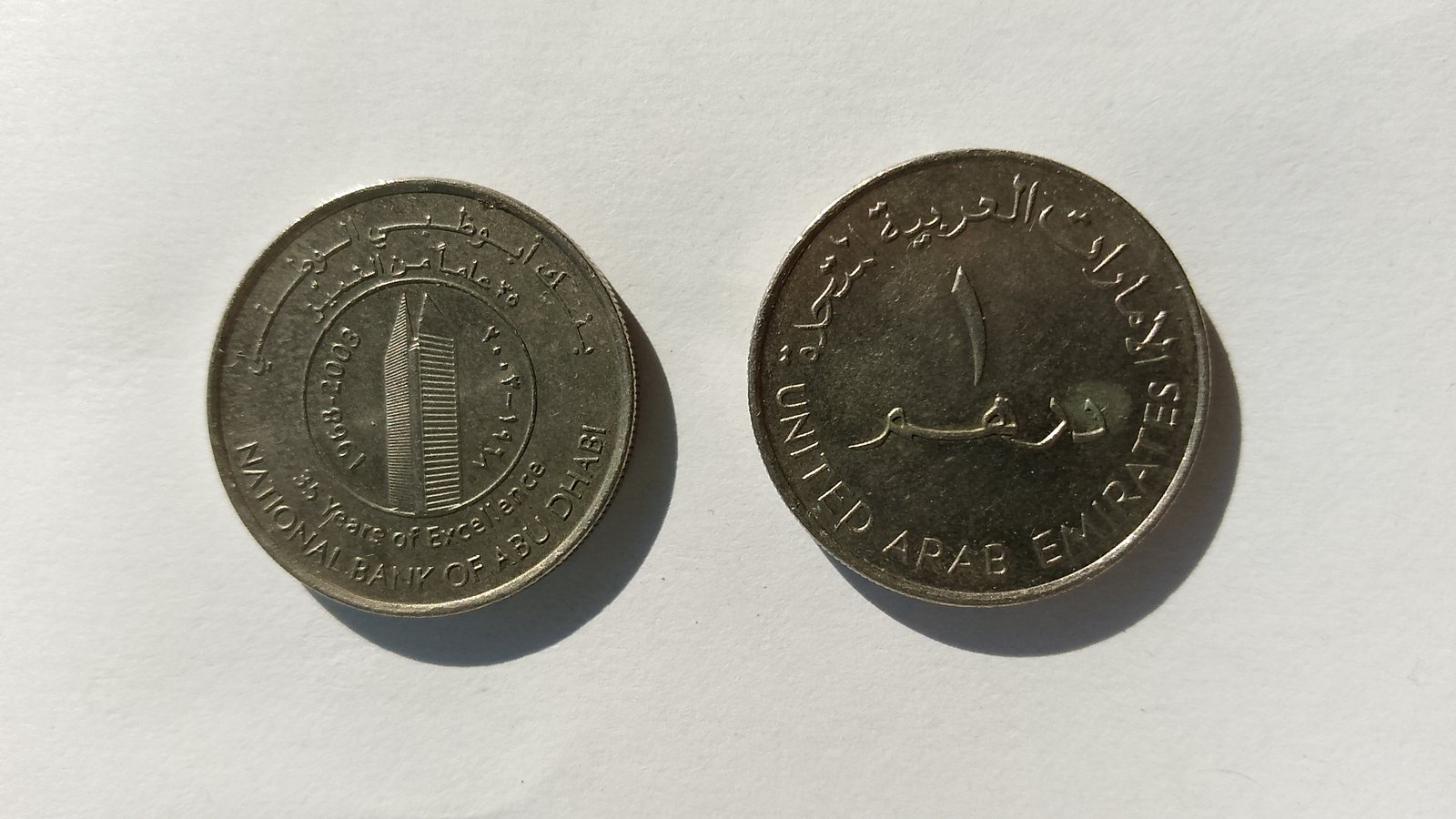
- Hero photo: LihUlv, UAE dirham and National Bank of Abu Dhabi commemorative dirham, Wikimedia Commons, CC0, cropped.
