Published 2 November 2026, 16:14 Asia/Gaza. Developing story: losses are suspected, not confirmed. We will add dated updates if the victim, the exchanges or the method are disclosed.
Quick answer: On 2 November, on-chain investigator ZachXBT warned that an unnamed EU entity is suspected of losing more than $106 million from several of its centralised-exchange accounts on 1 November. The funds were withdrawn as USDC and USDT, swapped fast into ETH, and pushed through instant exchanges, Monero and bridges. The victim, the exchanges and the attack method are not disclosed, and the loss is not independently confirmed. For any business with money on an exchange, the lesson is practical: lock withdrawals to a whitelist, strip withdrawal rights from API keys and use hardware-key 2FA today.
Update, 4 November 2026
ZachXBT now puts the total above $133M and has named the French bank Crédit Mutuel Arkéa as the suspected victim. The bank has not confirmed. Read our follow-up: Crédit Mutuel Arkéa crypto hack: what we know and 10 exchange-account controls.
Key facts
- Source: ZachXBT community alert on his Telegram channel, 2 November 2026, 14:28 Asia/Gaza, which he calls a suspected theft.
- Victim: an EU-based entity, unnamed. Exchanges: multiple centralised exchanges, unnamed. Method: undisclosed.
- Amount: “$106M+”, suspected, not independently confirmed.
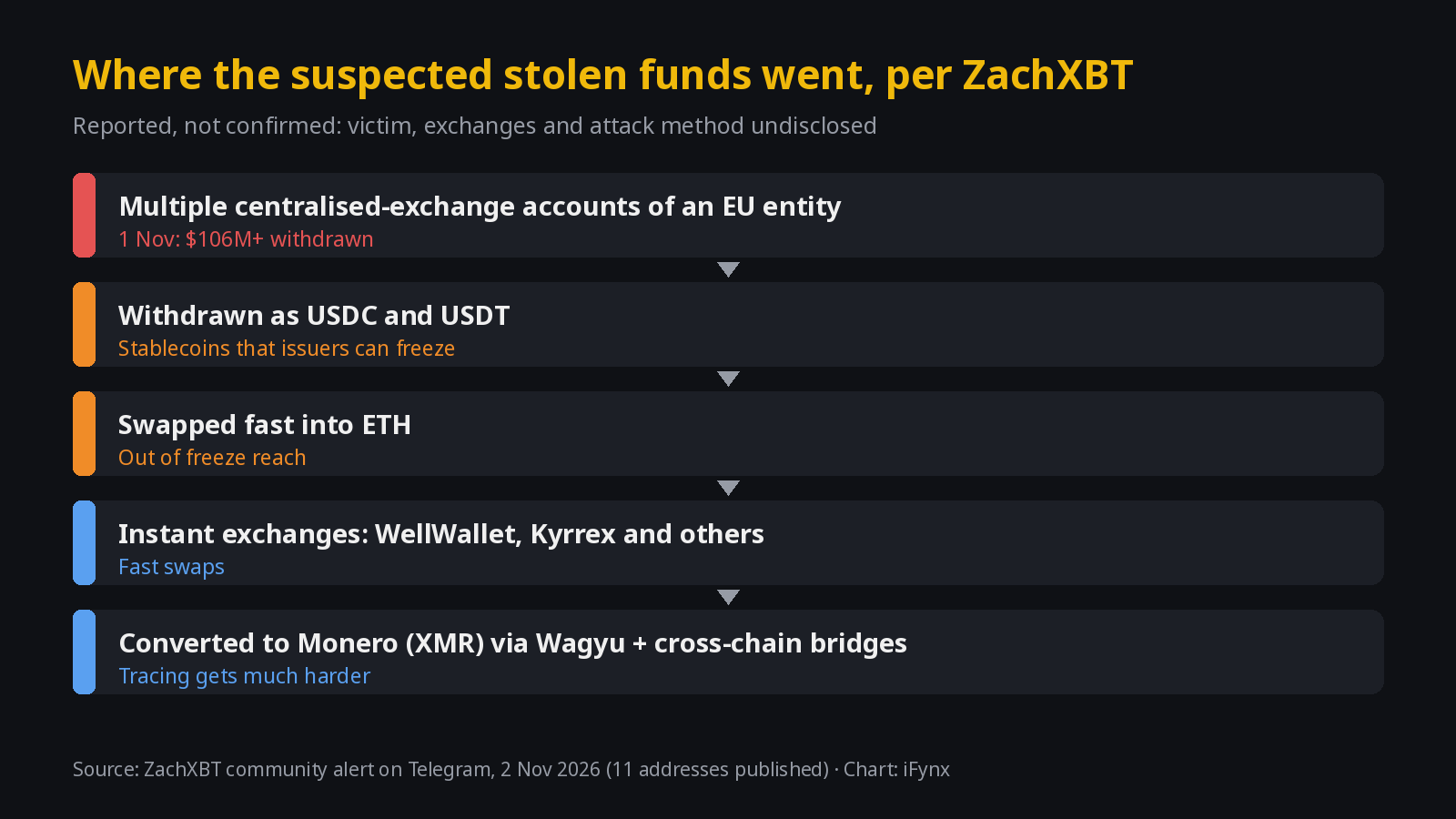
- Route: USDC/USDT, then ETH, then instant exchanges such as WellWallet and Kyrrex, then Monero via Wagyu, plus cross-chain bridges. ZachXBT published 11 theft addresses.
- Attribution: unidentified; ZachXBT says with high confidence it is not Lazarus Group.
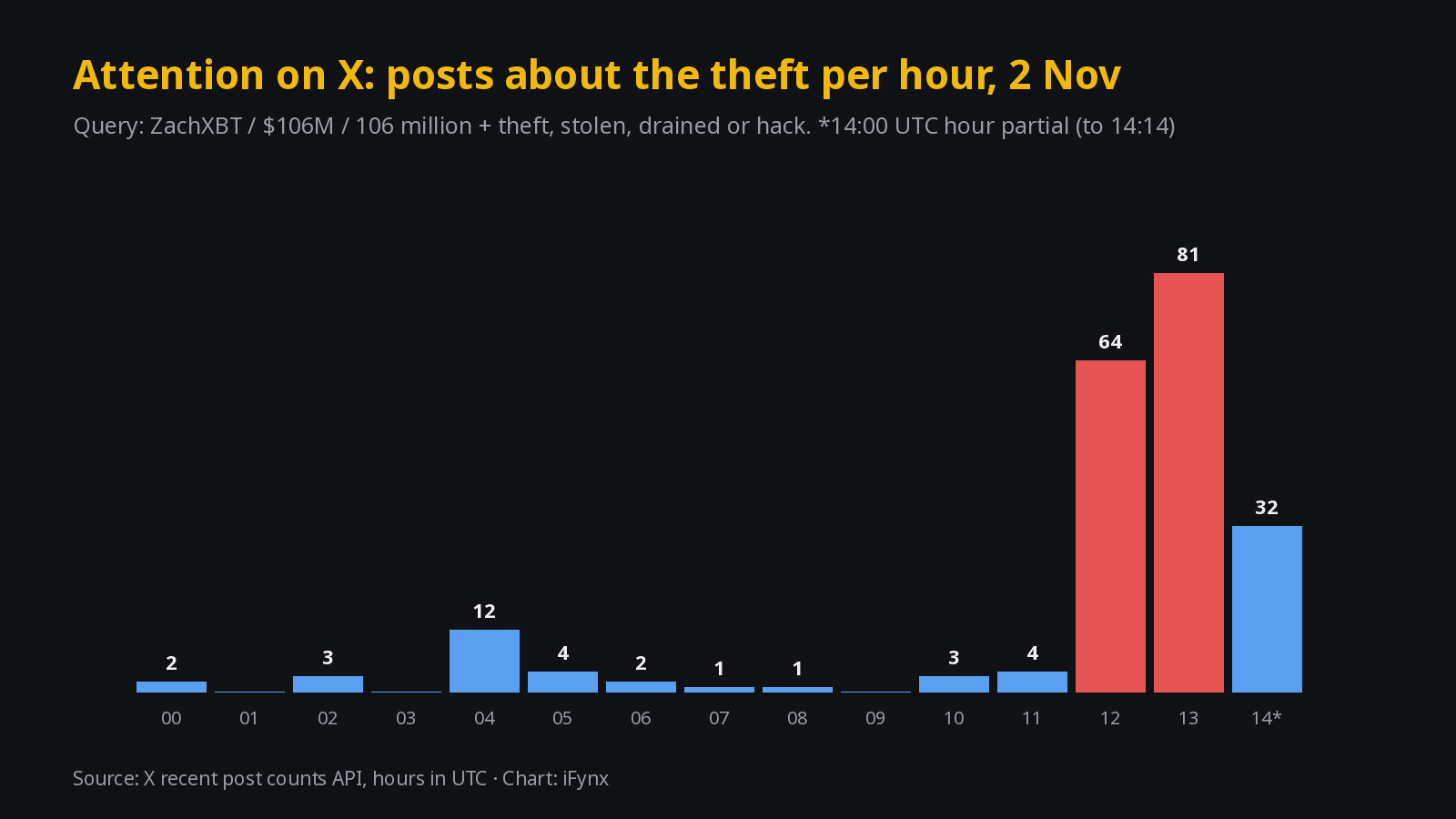
- Attention: posts about it on X jumped from single digits per hour to 64 and 81 per hour after the alert.
What we know about the $106 million crypto theft
ZachXBT’s alert says the suspected stolen funds were withdrawn as USDC and USDT “by an illicit actor”, and that over the following 24 hours the actor was “aggressively swapping USDC for ETH”, sending it to instant exchanges, converting to XMR through Wagyu and bridging across chains. Crypto Briefing, The Defiant and ChainCatcher carried the same details; none named the victim.
| Item | What is reported | Status |
|---|---|---|
| Victim | Unnamed EU-based entity | Not disclosed |
| Amount | $106M+ (suspected) | Not independently confirmed |
| Date | 1 November 2026 | Alert posted 2 Nov, 14:28 Asia/Gaza |
| Exchanges | Multiple centralised exchanges | Not named |
| Attack method | Unknown | Not disclosed; do not assume |
| Assets withdrawn | USDC and USDT | Reported by ZachXBT |
| Laundering route | ETH, instant exchanges (WellWallet, Kyrrex), XMR via Wagyu, bridges | Reported by ZachXBT |
| Attribution | Unidentified actor; “NOT Lazarus Group” per ZachXBT (high confidence) | Investigator’s view |
While the illicit actor remains unidentified, I can say with a high degree of confidence it is NOT Lazarus Group based on multiple laundering indicators.
ZachXBT, 2 November 2026
Why the thief raced out of USDT and USDC
Stablecoins are the easiest crypto to freeze. Tether and Circle can blacklist addresses that hold USDT or USDC, and exchanges can freeze deposits. A thief holding stablecoins is racing that clock, so the quick swap into ETH is a signal of how much the first hour matters. Once funds reach Monero, a privacy coin, and move across bridges, public tracing becomes much harder, and Crypto Briefing notes that recovery looks complex.
For a business, this means the defence has to happen before funds leave the account. After the withdrawal, your options shrink by the minute. This is the same lesson as the hot-wallet losses in the BTCPay Server hack and the exchange-side theft in the Binance hack.
Crypto exchange account hacked? The treasury lockdown checklist for Gulf and Egypt businesses
This applies to startups, fintechs, OTC desks, payment firms and merchants in the UAE, Saudi Arabia and Egypt that keep balances on any exchange. We do not know how this victim was breached, so the checklist covers the common ways company accounts get drained: stolen logins, abused API keys and changed withdrawal settings.
- Turn on the withdrawal whitelist on every exchange account today, with the longest address-change lock the exchange offers (often 24 to 48 hours). Adding an address should need a second person.
- Make API keys trade-only and IP-bound. Bots and accounting tools almost never need withdrawal rights. Bind each key to your server’s fixed IPs and delete keys nobody uses.
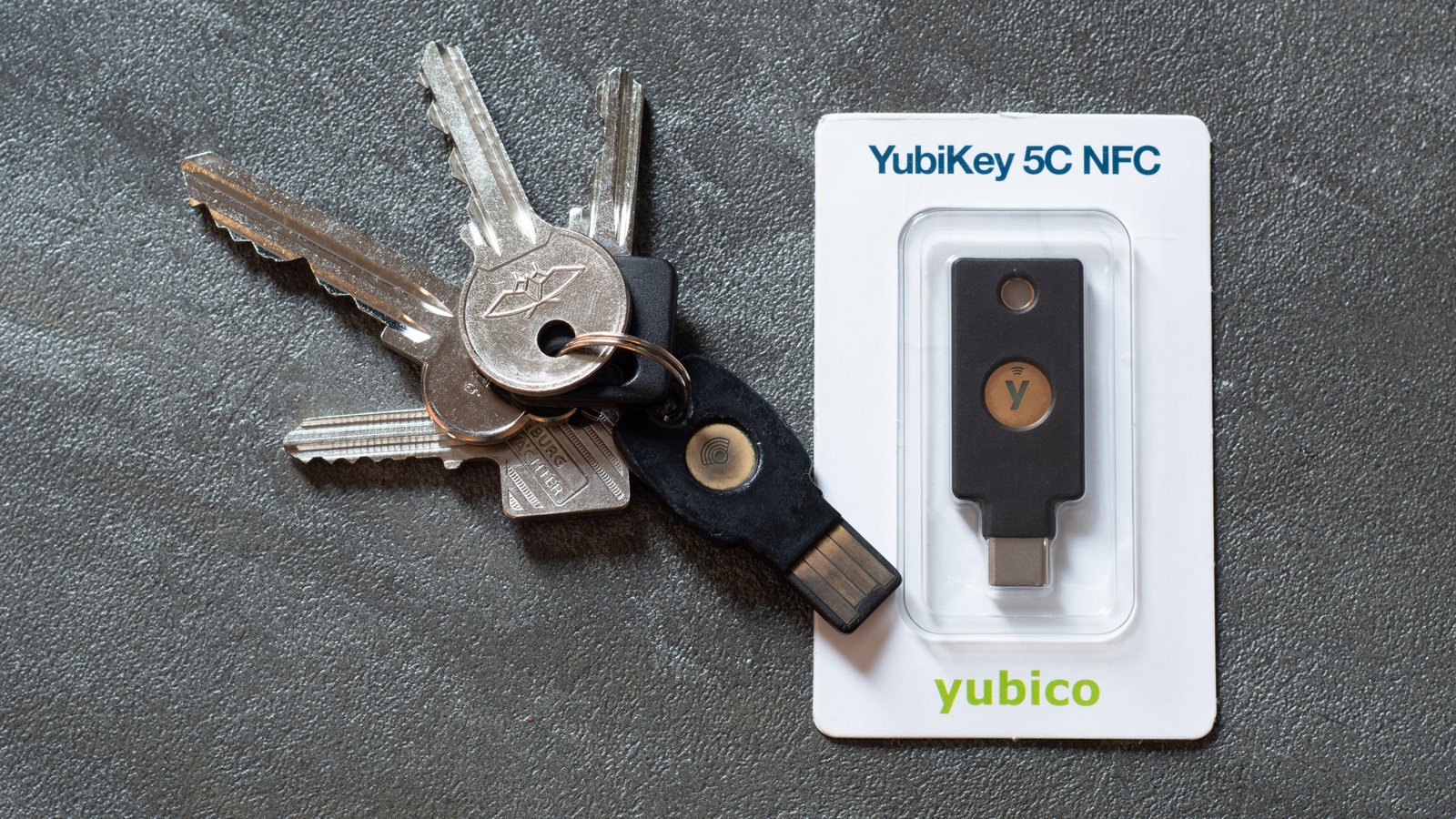
- Use hardware security keys (FIDO2/passkeys) for 2FA, not SMS. Lock the email accounts that can reset exchange passwords the same way.
- Split balances into sub-accounts with their own withdrawal limits, and keep only working capital on exchanges. Hold the rest in a multisig wallet or with a regulated custodian.
- Require approval for withdrawals. Use the exchange’s multi-user approval feature if it has one, or policy controls in your custody wallet, so no single login can move funds.
- Reconcile daily and alert in real time. Alert on any new device login, new API key, whitelist change or withdrawal above a threshold, and route alerts to more than one person.
- Write the incident runbook now: exchange security contacts, Tether and Circle freeze-request steps, who calls the police, and who tells the bank and auditors. In a theft like this, minutes matter.
The withdrawal whitelist in one line
If withdrawals can only go to addresses you approved days ago, someone who steals your password still cannot send your money to themselves. Turn it on, set the longest lock, and require two people to add an address.
If it happens to you: the first hour
- Minute 0 to 10: contact the exchange’s security team through its official support channel and ask it to freeze the account, revoke all API keys and flag the receiving addresses.
- Minute 10 to 30: if USDT or USDC moved, send Tether and Circle the transaction hashes and receiving addresses and ask for a freeze. Ask exchanges that might receive the funds to watch those addresses.
- Within the hour: preserve evidence (login history, API logs, emails, screenshots, transaction hashes). Rotate passwords and keys on every connected account and email.
- Report: in Saudi Arabia through the Ministry of Interior’s cybercrime reporting service or the Kollona Amn app; in the UAE to the police (Dubai Police runs an eCrime platform) and to VARA if your provider is VARA-licensed; in Egypt to the Ministry of Interior. Inform your bank, auditors and, if regulated, your supervisor.
Attention on X
What we are watching next
- Whether the victim or the exchanges confirm the loss and explain how the accounts were accessed.
- Movement on the 11 published addresses and any freezes by Tether, Circle or exchanges.
- Responses from the instant-exchange services named in the tracing.
How iFynx can help
iFynx builds bilingual fintech and crypto products for teams in the UAE, Saudi Arabia and Egypt, including admin consoles with approval workflows, role-based access and alerting. See our services. Related: the Coinbase data breach and opening a crypto-friendly bank account in the UAE.
Frequently asked questions
Which company lost $106 million, and how?
Nobody has said. On-chain investigator ZachXBT describes the victim only as an EU entity that is suspected of losing more than $106 million from several centralised-exchange accounts on 1 November. The company, the exchanges and the way the accounts were accessed have not been disclosed, and the loss has not been independently confirmed. We will not guess.
Is this connected to the Binance hack?
There is no public evidence of a link. ZachXBT says he is highly confident, based on laundering patterns, that the actor is not North Korea’s Lazarus Group, which is the group linked to several of the largest exchange thefts. Treat any link to other incidents as unproven.
Can stolen USDT or USDC be frozen?
Often, if you are fast. Tether and Circle can blacklist addresses that hold their tokens, and exchanges can freeze deposits they receive. That is why the thief reportedly swapped the stablecoins into ETH quickly and then moved part of it into Monero: once funds leave stablecoins and move through privacy coins and bridges, freezing gets much harder.
What is a withdrawal whitelist and does it really help?
A withdrawal whitelist (or allowlist) limits withdrawals to addresses you approved in advance. Most large exchanges offer it, usually with a lock period after you add a new address. If an attacker gets into the account but cannot add a new address quickly, they cannot send funds straight to their own wallet. It is the single most useful setting for a company account.
Should a business keep its treasury on an exchange?
Keep only what you need for trading and settlement on an exchange. Hold the rest in custody you control, such as a multisig wallet that needs several approvers, or with a regulated custodian. Spread balances across sub-accounts with their own limits so one compromised login cannot drain everything.
What should a UAE, Saudi or Egypt business do if its exchange account is drained?
Contact the exchange’s support and security team immediately and ask them to freeze the account and any onward deposits. Send the receiving addresses to Tether or Circle if stablecoins are involved. Keep screenshots, transaction hashes and login logs. Report to the police: in Saudi Arabia through the Ministry of Interior’s cybercrime service or the Kollona Amn app, in the UAE to the police (Dubai Police runs an eCrime platform) and to VARA if your provider is VARA-licensed, and in Egypt to the Ministry of Interior. Tell your bank and auditors.
Sources
- ZachXBT community alert on Telegram, 2 November 2026
- Crypto Briefing, 2 November 2026
- The Defiant
- ChainCatcher
- CoinLaw
- Saudi Ministry of Interior cybercrime reports; VARA
- X post counts: X recent counts API, queried 2 November 2026
- Cover photo: edwinchuen, Wikimedia Commons, CC BY 2.0, cropped. In-article photo: Daniel Aleksandersen, Wikimedia Commons, CC BY 4.0. Charts: iFynx.


Related reading
- Android TV Box Malware: Google Takes Down the XCPE Botnet in 1.3 Million Boxes. Is Your Box or IPTV Receiver Infected? A Check-and-Replace Guide for Egypt, Iraq, the Gulf and Palestine
- Mercado Bitcoin Hack: Brazil’s Largest Crypto Exchange Halts Withdrawals After a Reported $40M Drain. Is Your Money Safe on an Exchange in the UAE, Saudi Arabia or Egypt?
- Lighter Suspected Exploit: $10.39M USDC Pulled, Withdrawals Suspended, What Lighter Says, and Lessons for Gulf and Egypt Exchanges